



Latest from LCGC International
about 2 months ago
ISC 2026 PreviewLatest Content



Advertisement
Shorts
0:46
Making the ESI-APPI Workflow Practical for LC-MS
18 hours ago
by
Gérard Hopfgartner
1:04
Adapting Column Technology for mRNA
2 days ago
by
Jonathan Maurer
0:51
Building the Analytical Toolbox for mRNA Characterization
7 days ago
by
Jonathan Maurer
1:04
The Best Leadership Advice to Live By
8 days ago
by
Erin E. Chambers
0:43
The Precision Needed for GLP-1 Testing
13 days ago
by
Erin E. Chambers
0:37
Why Methanol is Superior for Oligos
14 days ago
by
Jonathan Maurer
0:51
How Column Science Speeds Up Drug Development
15 days ago
by
Erin E. Chambers
1:14
How AI is Revolutionizing Biopharma R&D and Growth
18 days ago
by
Erin E. Chambers
0:40
Why You're Tuning the Wrong Lab Parameters
20 days ago
by
Jonathan Maurer
0:51
The Power of Making Failure More Visible
a month ago
by
Ina Varfaj
Advancing Miniaturized Column and Instrument Technologies for Capillary Liquid Chromatography
A Look at Recent Updates
LCGC International July/August Issue
Read the Latest Cutting-Edge Articles from LCGC

Separation Science in 2025–2026: The Products Shaping Analytical Workflows
Read More About the Latest Cutting-Edge Technology on the Market
Why are Most Drugs Basic: Implications in Pharmaceutical Testing by HPLC
Why Do Basic Drugs Dominate Modern Therapeutics?
The Column June Issue
A Look at the Latest Applications, Articles, and Interviews from the World of Chromatography

Podcasts

Videos

Advertisement
All Content
Advertisement
Gérard Hopfgartner explains how atmospheric pressure photoionization can generate radical cations in LC–MS, unlocking EI-style spectra and NIST's spectral library.

Isabelle Kohler traces her unplanned path from pharmacy to bioanalysis, and why the same career struggles cut across gender lines in her PhD coaching.
LCGC International spoke to Akina Nara of Japan’s Tohoku Medical and Pharmaceutical University about a new study which links a blood compound to how long a body has been dead.
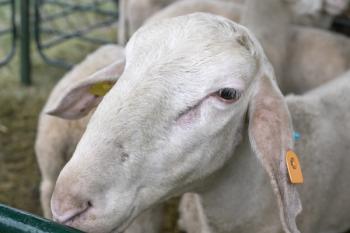
Targeted ultrahigh-performance liquid chromatography (UHPLC) links blood metabolites to sheep feed efficiency.

A method coupling gas chromatography-tandem mass spectrometry (GC-MS/MS) and multiple reaction monitoring (MRM) tracks lipid markers of decomposition in commingled remains.

This week's top stories on the Chromatography Online website spotlight LCGC International's new SFC-focused interview series charting the technique's rise alongside LC and GC, complemented by a practical GC data-reporting refresher and a study using chromatography to detect trace pesticides in tap water.

Pyrolysis-gas chromatography-mass spectrometry (Py-GC-MS) shows lung microplastics rose over 33 years, per new study.
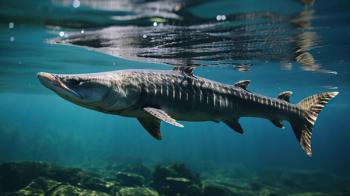
Chromatography isolates sturgeon cartilage compounds that may ease osteoarthritis inflammation.

High-performance liquid chromatography (HPLC)-based study links IV vitamin intake to NICU infant blood levels.

Ultrahigh-performance liquid chromatography-mass spectrometry (UHPLC-MS) metabolomics links plasma changes to chronic epileptic seizures in mice.
Advertisement
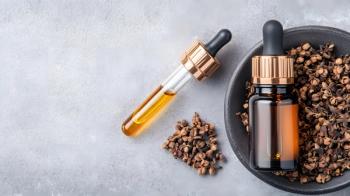
Headspace gas chromatography-ion mobility spectrometry (HS-GC-IMS) and gas chromatography-olfactometry-mass spectrometry (GC-O-MS) reveal aroma compounds in two Sichuan pepper oils.

Researchers are using chromatography methods to track elusive pesticides in French tap water.

Seven eco-friendliness tools rate 30 high-performance liquid chromatography (HPLC) methods for testing atorvastatin.
"One-Shot" Solutions for Preparative Chiral Sub/Supercritical Fluid Chromatography Using Chiroptical Detection
Published: | Updated:
A new “one-shot” strategy for preparative chiral supercritical fluid chromatography (SFC) offers fast and effective approach to obtain and characterize individual enantiomers.

SFC delivers measurable cycle-time and solvent-use gains beyond chiral work, spanning biopharma and anti-doping applications, experts say.
Advertisement
Advertisement